
Keynote speakers
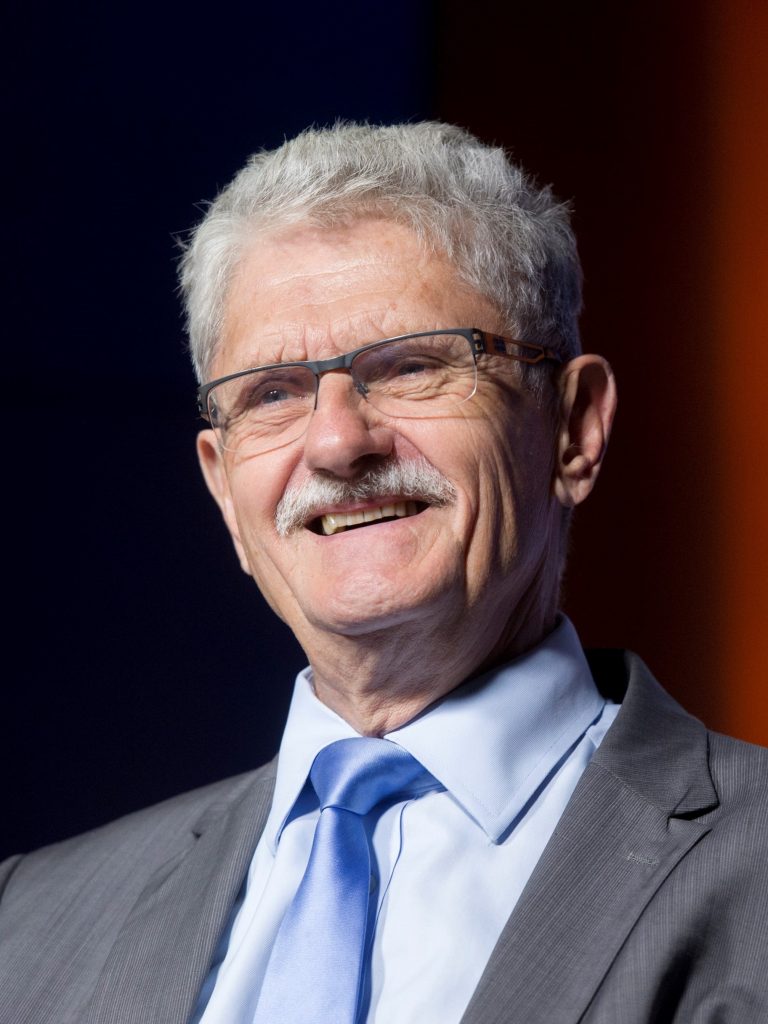
MOGENS LYKKETOFT gave the speech On track towards a sustainable future?
Mogens Lykketoft was President of the United Nations General Assembly in 2015-2016, when the Sustainable Development Goals and the Paris Climate Agreement were adopted. Since then, he has devoted most of his time – during more than 350 meetings in Denmark and abroad and in lots of articles and TV presentations – to inform about the Global Goals and agitate for the urgency of Climate Action. He is an Economist from the University of Copenhagen. During 38 years, he was elected to the Parliament of Denmark and, over the years, he served as Minister for Taxation, Finance and Foreign Affairs; Leader of the Social Democratic Party and Speaker of Parliament.
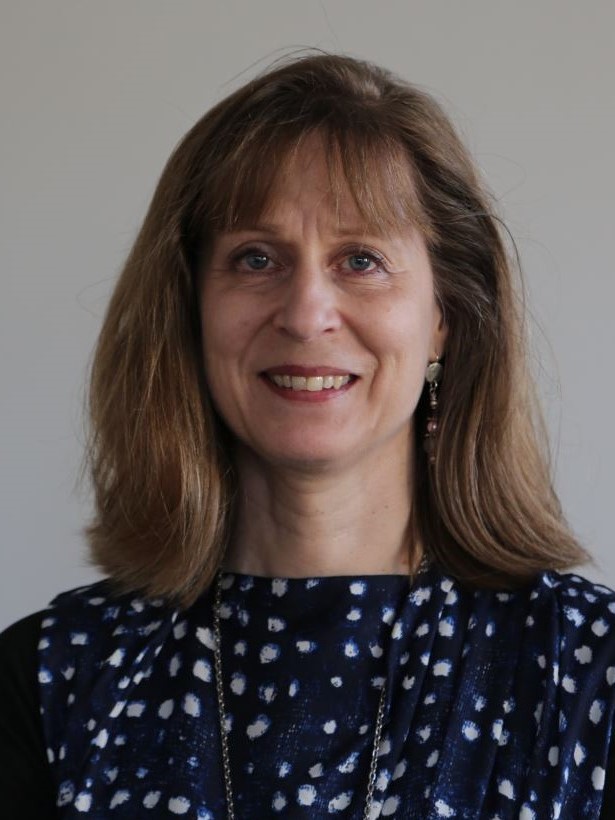
CATHARINA SIKOW-MAGNY gave the speech EC Strategy on Energy System Integration
Catharina Sikow-Magny joined the European Commission in 1997 and is the Director responsible for Internal Energy Market and the Head of Unit in charge of retail markets, coal and oil in the Directorate General for Energy. Before that, she was the Head of Unit in charge of networks and regional initiatives. She has as well worked on international transport, trans-European network policy and financing, internalisation of external costs, and strategic policy research. Before joining the Commission, Catharina Sikow-Magny was a team leader and chief economist in the private sector in Finland. She has also worked for the United Nations Development Programme in Port-au-Prince, Haiti. She holds a Master of Economics degree from the Aalto University, Finland.

MICHAEL LUNDGAARD THOMSEN gave the speech Roadmap for sustainable cement production in Denmark
Michael Lundgaard Thomsen is Managing Director in Aalborg Portland A/S, which is the only cement producer in Denmark. He holds a MSc in Manufacturing Management and Systems combined with a HD – Business degree in Organisation and Innovation and an Executive MBA in Change Management and has more than 20 years’ experience within top management. Prior to Aalborg Portland, Michael Lundgaard has held executive management positions as CEO and COO in companies like Danfoss, Siemens and Linak. In November 2019, he was appointed chairman in the climate partnership for energy intensive industry by the Danish Government. Furthermore, Michael Lundgaard Thomsen is member of the boards in the Confederation of Danish Industry (DI): Committee for Energy and Climate Policy, and Processing Industry Committee.
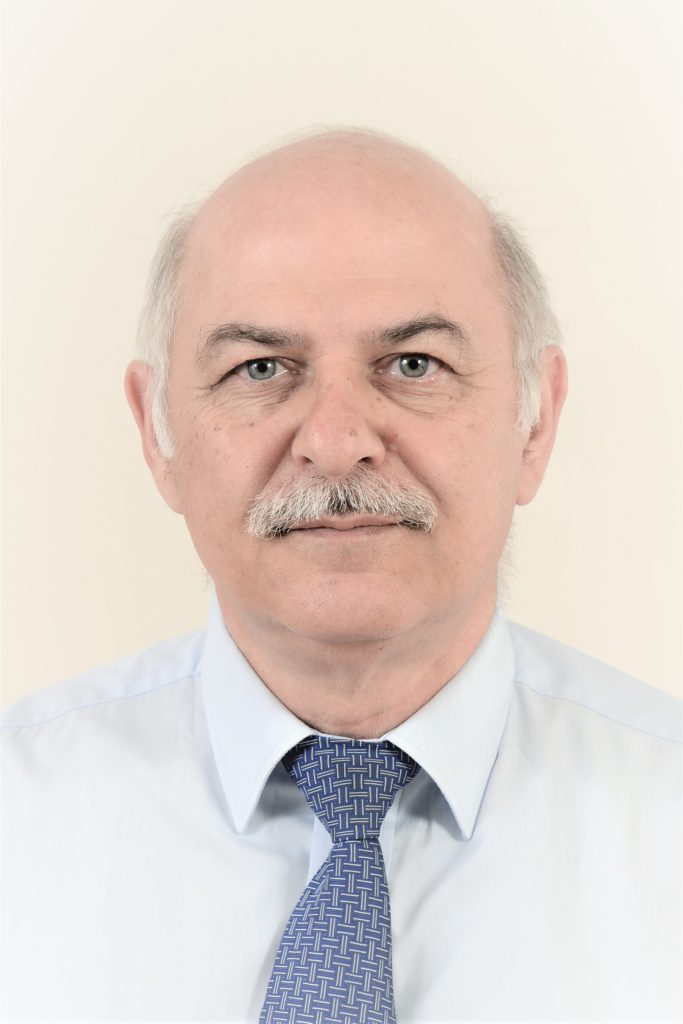
SOTERIS KALOGIROU gave the speech Renewable Energy Systems – Current status and Prospects In the World
Soteris Kalogirou is professor at the Department of Mechanical Engineering and Materials Sciences and Engineering of the Cyprus University of Technology and Editor-in-Chief of the Renewable Energy journal. For more than 35 years, Professor Soteris Kalogirou has been actively involved in research in the area of solar energy and particularly in flat plate and concentrating collectors, solar water heating, solar steam generating systems, desalination and absorption cooling. Additionally, he is involved in a pioneering research dealing with the building integration of solar thermal systems (BISTS), for which he chaired COST Action TU1205. He has been a member of World Renewable Energy Network since 1992 and is a member of the American Society of Heating Refrigeration and Air-conditioning Engineers, Institute of Refrigeration and International Solar Energy Society.

LAUREN EDELMAN gave the speech Facebook’s commitment to renewable energy and energy efficiency: Innovation and Heat Recovery
Lauren Edelman is an Energy Specialist at Facebook. Her responsibilities include identifying and implementing energy efficiency and renewable energy solutions for Facebook’s data centers. She has been a key contributor to Facebook’s innovation in the energy space. Lauren Edelman supports Facebook’s European data centre portfolio which includes facilities in Denmark, Sweden, and Ireland. In Odense, Denmark, she has led the implementation of the world’s first large-scale heat recovery project from a hyperscale data center. She joined Facebook in 2016, after working in project finance at SunEdison, a large renewable energy developer. She holds a BSE in Chemical and Biological Engineering from Princeton University.
Presentations
Henrik Lund: Opening speech
Mogens Lykketoft: On track towards a sustainable future?
Catharina Sikow-Magny: EC Strategy on Energy System Integration
Michael Lundgaard Thomsen: Roadmap for sustainable cement production in Denmark
Soteris Kalogirou: Renewable Energy Systems – Current status and Prospects In the World
Lauren Edelman: Facebook’s commitment to renewable energy and energy efficiency: Innovation and Heat
Henrik Lund: Closing speech
Weena Bergstraesser: Lessons learned from Excess flow analyses for various district heating systems
Andra Blumberga: Achieving Positive Energy Block in historic urban environment: simulation and evaluation of alternative scenarios
Stef Boesten: Water to water heat pump for district heating: modeling for MILP optimization and application to a real case study
Hermann Edtmayer: Sector Coupling Potentials of a 5th Generation District Heating and Cooling Network
Thomas Estermann/Elisabeth Springmann: Method for determining the feasibility of Grid and Ancillary Services by Smart Meters
Luca Ferrari: Integrated planning of multi- energy systems (PlaMES): comprehensive modelling framework and decision support tool
Matteo Giacomo Prina: Optimization method to obtain marginal abatement cost- curve through EnergyPLAN software
Hans Christian Gils: The Contribution of Flexible Sector Coupling to Fully Renewable Electricity Generation in Australia
Elisa Guelpa: Maximize the effects of district heating demand response in multi-energy optimization
Marnoch Hamilton-Jones: Fault detection and optimization potential on the demand side of district heating systems
Aleksandar Ivancic: Evaluation of district energy systems with shared systems for heating and cooling generation
Joseph Jebamalai: An Automated Method to Design Multi-Source District Heating Networks with Integrated Thermal Energy Storage – A Case Study
Hicham Johra: Using data from smart energy meters to gain knowledge about building clusters connected to district heating networks: A Danish example
Goran Krajačić: Modelling the water-energy nexus of the future smart island
Shravan Kumar: Comparison of modelling approaches for operational optimization of district cooling networks
Ari Laitala: Modelling one hour level heating energy consumption of buildings – can AI algorithms enhance the understanding?
Thomas Licklederer: A Thermohydraulic Model of Bidirectional Heat Networks with Prosumers
Danica Maljkovic: Evaluation of energy efficiency measures in district heating systems with deep learning
David Maya-Drysdale: How scenarios can facilitate local energy planning in cities
Andrea Menapace: A flexible methodology to analyse 100 % renewable energy cities
Steffen Petersen: Evaluating the temperature performance of Danish building typologies in district heating networks
Uni Reinert Petersen: Pathways towards 100% renewable energy on the Faroe Islands
Stefan Petrović: An improved modelling of Danish district heating supply and demand in the future energy system
Marianna Pozzi: A transparent assessment of retrofit potential in Italy based on open data
Diego Viesi: A cost-optimized approach in regional decarbonisation: the integrated and dynamic energy modelling of the Province of Trento
Fan Zhang: Night Setback Identification of District Heat Substations using Bidirectional Long Short Term Memory with Attention Mechanism
Theofanis Benakopoulos: Faults detection and low operating temperatures in radiator system by using data from existing digital heat cost allocators in a multi-family building
Tom Burton: Techno-economic assessment of external HIU cupboards on low temperature heat networks
Michel Gross: Model based analysis of future district heating networks
Oddgeir Gudmundsson: Central heat plant vs decentral temperature boosting in district heating
Mengting Jiang: A data-driven approach for fast and accurate dynamic simulation of district heating networks
Gareth Jones: Acceptance Testing: Improvement of network performance through standardised dwelling test regime
Mathias Kersten: Emission reduction in 4th generation district heat supply networks
Igor Krupenski: District cooling system operation in cold climates with existing district heating networks
Ingo Leusbrock: DESTOSIMKAFE – Development & rating of technical & organizational system solutions for cold DH to supply heating and cooling
Graeme Maidment: Exploring 5th Generation Integrated energy systems
Sara Månsson: A taxonomy for labelling deviations in district heating systems
Thomas Naughton: Process for optimising heat network performance of existing buildings in the UK
Ivo Pothof: Robust thermo-hydraulic design of prosumer district heating networks
Pavel Rušeljuk: Economic Dispatch of District Heating Networks via Consumption- Based Management
Costanza Saletti: Enabling smart control by optimal management of the State of Charge of district heating networks
Amos Schledorn: An advanced optimization -based bidding method for district heating providers considering uncertainty and block bids
Tim Taylor: Case study of a 3rd gen CHP district heating system that got updated to a 5th gen system with a shared ground source heat pump system
Jan Eric Thorsen: Experience with booster for DHW circulation in multi apartment building
Riccardo Toffanin: Impact of Legionella regulation on a 4th generation district heating substation energy use and cost: the case of a Swiss single-family household
Ulrich Trabert: Feasibility study and techno- economic evaluation of a DH integration of a river water heat pump at a CHP plant in Germany
Anna Vannahme: Comparison of Different District Heating Substation-Systems in a Hardware-in-the-Loop-Test Rig
Yannick Wack: Showcasing the potential of adjoint-based topology methods to optimize District Heating Network design on district level
Sven Werner: Vocabulary for fourth generation of district heating
Louise Christensen: Thermal comfort and technology acceptance in homes with demand -responsive control of radiator thermostats
Yuriy Lobunets: Regenerative Thermoelectric Heat Pump for HVAC Systems
Dmitry Romanov: Technical, economic and ecological effects of lowering temperatures in the Moscow district heating system
Pierre JC Vogler-Finck: Field experience of data-driven control and monitoring to support energy efficient and flexible building operation
Benjamin Zühlsdorf: Model-based fault detection for use in digital twins of large-scale heat pump systems
Dagnija Blumberga: How to start the waste heat and boiler house competition in Latvia
Saeid Charani Shandiz: Towards net-zero emission and energy resilient communities: a multi-dimensional approach to energy master planning
Hrvoje Dorotić: Cost and Benefits of Shifting Towards Low Temperature District Heating Networks – Energy Planning Approach
Leire Gorroño-Albizu: How could heat consumers’ trust in district heating solutions be enhanced? Insights from Denmark and Sweden
Britta Kleinertz: District heating supply transformation –Strategies, measures and status quo of network operators transformation phase
Louise Krog: 4th generation district heating, consumers, consumer involvement
Stefano Morgione: A comprehensive framework for District Energy Systems Upgrade
Matteo Pozzi: Supporting Electricity Trading towards XBID implementation through innovative District Energy plant management
Tars Verschelde: Case studies on a decision support tool for thermal networks
Amela Ajanovic: Impact of coronavirus crisis on electrification of mobility
Nina Detlefsen: How electrification of the heating and transportation sector affects the load in low voltage electricity grids
Christine Gschwendtner: Uncertain impacts of technology, infrastructure, and vehicle use types on the integration of Vehicle-to-grid (V2G) into distribution networks
Reinhard Haas: The correlation between variable renewable energy sources and energy demand for heating&cooling
Sajjad Haider: Uncontrolled Electric Vehicle Charging in Low Voltage Grids – Impacts
Simon Meunier: Towards mapping grid reinforcement costs from residential low- carbon technologies penetration in Europe
Adrian Ostermann: Potential of vehicle to grid charging control of electric vehicles in congestion management
Niklas Wulff: Vehicle Energy Consumption in Python (VencoPy): Presenting and demonstrating an open source tool to calculate electric vehicle charging flexibility
Meng Yuan: The role of transportation electrification in the energy transformation of urban agglomerations: A case study of Beijing-Tianjin-Hebei region
Diederik Coppitters: Epistemic and aleatory uncertainty quantification of a grid-connected photovoltaic system with battery storage and hydrogen storage
Christine Damgaard Asmussen: Optimizing a grid-connected household photovoltaic installation in Denmark
Steven Dijkstra-Downie: Energy Strategy for Expanding Scottish Towns Greenspaces, waterbodies, shared ambient loops, heat pumps and PV to heat and power town growth projects
Julian Formhals: Dynamic transition to a renewable and efficient campus solar district heating grid with integrated medium deep borehole thermal energy storage
Luka Herc: Economic viability of flexibility options for smart energy systems with high share of renewable energy
Martin Heine Kristensen: Heat load demand response experiment in social housing apartments using wireless radiator setpoint control
Poul E. Kristensen: Wind + sun for 100% RE heating of buildings
Kertu Lepiksaar: Increasing CHP flexibility to improve energy system efficiency
Rasmus Lund: Combined heat and power storage: Feasibility in a national renewable energy system context
Johannes Röder: Decentral Heat Storages in System-Beneficial District Heating Systems – an Integrated Optimization Approach
Ligang Wang: Converting wastes efficiently and flexibly for grid-balancing services and sector coupling
Gatis Bazbauers: Linking energy efficiency policies toward 4th generation district heating system
Andrej Guminski: Holistic evaluation scheme for industrial greenhouse gas abatement measures – bringing together research and practice
Andreas Müller: How much to invest? Balancing investment costs and economic benefits of reducing the temperature levels in existing district heating networks
Robert Pratter: HEATflex: Development of a common technical & economic strategy to increase the competitiveness of CHP & district heating plants
Callum Rae: Practical learnings from deployed Smart Local Energy Systems: technical barriers to scale-up
Leon Joachim Schwenk-Nebbe: CO2 quota attribution effects on the European electricity system
Daniel Møller Sneum: Flexibility in the interface between district energy and the electricity system
Karl Vilén: The Impact of Climate Policy on the District Heating System in a Nordic city
Behnam Zakeri: Aftermath of COVID19 and the Energy Sector: Is a green recovery from economic slowdown possible?
Debmalya Biswas: Reinforcement Learning based HVAC Optimization in Factories
Henrik Brink: Identifying optimisation potential in electricity consumption profiles from hourly smart meter data at scale
Daniel Heidenthaler: Thermally activated building systems in wooden structures
Marcus Hummel:
Using least cost renovation combinations in buildings for developing future heat demand density maps: case studies in three cities in Europe
Paolo Leoni: Lowering the operating temperatures in old-generation district heating systems: first results from the TEMPO demonstration project in Brescia (Italy)
Antoine Levesque: Decarbonising buildings energy services through demand and supply
Chiara Piccardo: Life cycle cost and primary energy analysis of a multi-storey residential building retrofit to different energy levels with varied materials
Sverre Stefanussen Foslie: Integrated heating and cooling in the industry through heat pumps and thermal energy storages – case study of an electrified dairy
Dimitra Tzani: Different portfolios of measures to improve efficiency in the residential sector in Greece towards the achievement of the 2030 targets
Christian Bundgaard: System Effects of Implementing Electrofuels for Decarbonisation of the Transport Sector in a Danish Perspective
Tobias Hübner: Simulation-based analysis of synthetic fuels in the industry in relation to climate protection level
René Kofler: Comparison of different biorefinery systems integrating the electricity, heating and transport sector
Xavier Rixhon: The role of electro-energy carriers under uncertainties for Belgian energy transition
Hammam Soliman: Contribution of Power- to-X-to Power in retrofitting of Coal-Fired Power Plants
Christian Thommessen: Techno-economic System Analysis of an Offshore Energy Hub and Outlook of Electrofuel Applications
Kevin Verleysen: Influence of parametric and operational uncertainties on the dynamic operation of the Haber-Bosch synthesis process for seasonal hydrogen storage
Hamza Abid: Energy storage integration with solar PV for increased electricity access: A case study of Burkina Faso
Matthias Greiml: Assessing usage of power-to-gas as an alternative to electricity grid expansion to increase photovoltaic generation in south-east Austria
Bastian Hase: Using Short-Time Storage Potentials of Run-of-River Hydroelectric Plants for Frequency Control
Gauthier Limpens: Intermittent renewable energy integration: assessing the benefits of the flexibility options
Pia Manz: Future synergies of industrial excess heat potentials and buildings energy demand in Germany
Torben Ommen: Economic feasibility of fuel-shift appliances supplied by gas, electricity and district heating in Denmark
Frederik Palshøj Bigum: Real-scale integrated renewable energy systems
Dietrich Schmidt: Digitalisation of district heating systems
Vittorio Verda: Challenges in adoption of district cooling in densely populated areas
Marta Victoria: Early decarbonisation of the European energy system pays off
Alice Dénarié: Assessment of renewable and waste heat recovery in DH through GIS mapping: the national potential in Italy
Mostafa Fallahnejad: District Heating Grid Planning
Fabrizio Fattori: A Regression Model to Estimate the Dwelling-Network Connection Length Starting from Aggregated Information per Census Area
Markus Groissböck: Energy hub optimization framework based on open-source (software & data) – Review of frameworks and concept for districts & industrial complexes
Morten Karstoft Rasmussen: Data driven asset management – online distribution grid analysis based on GIS and meter consumption data
Nina Kicherer: Design of a District Heating Roadmap for Hamburg
Hannes Koch: Rooftop photovoltaic – an algorithmic solution for obtaining total potential power generation by processing solar irradiance data
Samuel Macchi: A validated method to simulate district heating network topologies to enable assessing district heating cost
Johannes Pelda: FERNWÄRMEATLAS – An Online Tool to Collect Information about District Heating Systems in Germany
Abdulraheem Salaymeh: Determination of the district heating supply structure based on geospatial and statistical data
Martin Santa Maria: District heating system optimization with RIVUS, Case study Salzburg
David Schmidinger: Assessment of future heat demand and supply with the HOTMAPS toolbox: A case study for San Sebastian
Giulia Spirito: Potential diffusion of renewable based 3GDH and 4GDH assessment through energy mapping: a case study in Milano
Hans Jørgen Brodersen: Turning SME ideas into New Smart Energy Solutions
Bo Eskerod Madsen: Clamp-on Monitoring of Energy from the Outside of Existing Multiconductor Cables and Pipes
Bjarke Henriksen:
Total Building Automatic Energy Management
Mario Javier Rincón:
Micro-ORC Technology Development
Henning Schmidt-Petersen: Biomass treatment – How to turn a problem into a resource
Lina Aglén: Potential of unutilised waste- heat possible to incorporate into UK district heating production
Lisa Altieri: Selecting the right heat source in an ultra-low temperature heating network
Helge Averfalk: Low-temperature excess heat recovery in district heating systems: The potential of European Union metro stations
Federico Bava: Feasibility analysis of renewable DHC concepts in different climatic zones
Roman Geyer: Implementation of low- temperature district heating and its benefits
Stefan Holler: Feasibility study on solar thermal process heat in the beverage industry
Anna Kallert: A Showcase Project: 4th Generation District Heating in Moosburg an der Isar
Hironao Matsubara: Heat Roadmap Japan: Smart energy system combining renewable energy and district energy to decarbonize urban area in Japan
Wiebke Meesenburg: Flexible heat supply from supermarket refrigeration systems
Francesco Mezzera: District heating potential in a hydrogen-based energy system – An exploratory focus on Italy
Peter North: A pathway towards the heat autonomous city
Henrik Pieper: Ranking of heat sources and sinks based on seasonal performance estimation and demands for heating and cooling areas
Tobias Reiners: Waste heat from mine water in an ultra low temperature district heating network
Akos Revesz: Waste heat integration into heat networks; a UK wide assessment
Brage Rugstad Knudsen: Demand-side management for reducing peak-heating costs in a local low-temperature district heating grid with waste-heat utilization
Dirk Vanhoudt: TEMPO – Results of the first temperature reduction measures in the demo sites
Jelena Ziemele: A multi-factorial decision support tool for integration of small-scale industrial heat pumps and solar PVs into a district heating system
Conference committees
Prof. Dagnija Blumberga, Riga Technical University, Latvia
Dr. Robin Wiltshire, Building Research Establishment (BRE), UK
Dr. Anton Ianakiev, Nottingham Trent University
Dr. Ralf‐Roman Schmidt, Austrian Institute of Technology, Austria
Dr. Hanne L. Raadal, Østfold Research, Norway
Dr. Richard van Leeuwen, Saxion University, The Netherlands
Prof. Thomas Brown, Karlsruhe Institute of Technology, Germany
Prof. Martin Greiner, Aarhus University, Denmark
Prof. Dr.‐Ing. Ingo Weidlich, HafenCity University, Germany
Prof. Eric Ahlgren, Chalmers University of Technology, Sweden
Prof. Sven Werner, Halmstad University, Sweden
Prof. Leif Gustavsson, Linnaeus University, Sweden
Prof. Poul Erik Morthorst, Technical University of Denmark
Prof. Svend Svendsen, Technical University of Denmark
Prof. Xiliang Zhang, Tsinghua University, China
Prof. Bernd Möller, University of Flensburg, Germany
Prof. Bent Ole G. Mortensen, University of Southern Denmark
Prof. Neven Duic, University of Zagreb, Croatia
Prof. Christian Breyer, Lappeeranta University of Tech, Finland
Prof. Ernst Worrell, Utrecht University, The Netherlands
Dr. Paula Ferreira, University of Minho, Portugal
Ass. Prof. Younes Noorollahi, University of Tehran, Iran
Ass. Prof. Carsten Bojesen, Aalborg University, Denmark
Dr. Dirk Vanhoudt, KU Leuwen, Belgium
Prof. Mark Z. Jacobson, Standford University, US
Prof. Frede Hvelplund, Aalborg University, Denmark
Anders Bavnhøj Hansen, Energinet.dk
Anders Dyrelund, Rambøll
Jan‐Eric Thorsen, Danfoss
Anders N. Andersen, EMD International
Henrik Ottesen, DESMI
Peter Jorsal, LOGSTOR
Per Wulff, Vestforbrænding
Morten Abildgaard, Viborg Fjernvarme
Jesper Møller Larsen, Aalborg Forsyning, Varme
Steen Schelle Jensen, Kamstrup
John Bøgild Hansen, Haldor Topsøe
Ulrik Stridbæk, Ørsted
Fabian Levihn, Stockholm Exergi
Sponsors
Sponsorships for Best Presenter Awards


Silver Sponsorships